PPL คืออะไร? รู้จักใบอนุญาตนักบินส่วนบุคคล ก้าวแรกสู่การเป็นนักบินWhat Is a PPL? Understanding the Private Pilot License — Your First Step to Becoming a Pilot
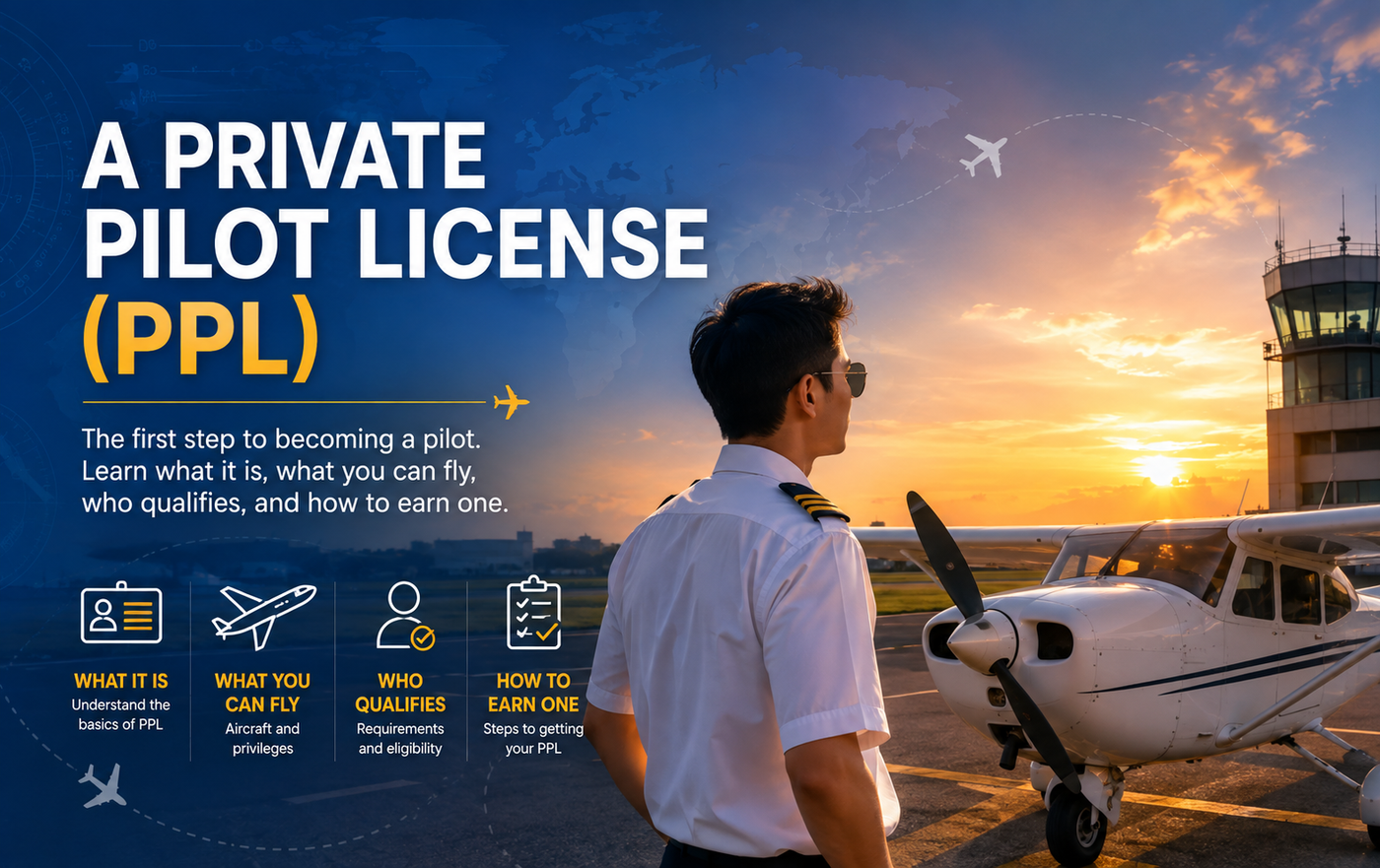
PPL ย่อมาจาก Private Pilot License หรือใบอนุญาตนักบินส่วนบุคคล เป็นใบอนุญาตพื้นฐานที่เปิดโอกาสให้ผู้ถือสามารถทำการบินกับเครื่องบินได้ในฐานะนักบินผู้ควบคุมอากาศยาน (Pilot in Command) สำหรับการบินส่วนตัวและการพักผ่อน ถือเป็นจุดเริ่มต้นของเส้นทางการบินสำหรับทั้งผู้ที่รักการบินเป็นงานอดิเรก และผู้ที่ตั้งใจต่อยอดไปสู่การเป็นนักบินอาชีพ
บินอะไรได้บ้าง ผู้ถือ PPL สามารถบังคับเครื่องบินและพาผู้โดยสารร่วมเดินทางได้ แต่ต้องเป็นการบินที่ไม่แสวงหาผลกำไร กล่าวคือ ไม่สามารถรับค่าจ้างในการบินได้ หากต้องการบินเพื่อหารายได้ เช่น เป็นนักบินสายการบิน จะต้องเรียนต่อเพื่อรับใบอนุญาตนักบินพาณิชย์ (CPL) และคุณสมบัติอื่นเพิ่มเติม
คุณสมบัติผู้เรียน โดยทั่วไปผู้ที่ต้องการฝึกบิน PPL ต้องมีอายุตามเกณฑ์ขั้นต่ำ (มักเริ่มเรียนได้ตั้งแต่วัยรุ่นและสอบรับใบอนุญาตเมื่ออายุครบ 17 ปี) ผ่านการตรวจร่างกายทางเวชศาสตร์การบินตามมาตรฐาน และสามารถสื่อสารภาษาอังกฤษได้ในระดับที่ใช้ในการบิน ทั้งนี้รายละเอียดอาจต่างกันไปตามหน่วยงานกำกับดูแลของแต่ละประเทศ เช่น CAAT ของไทย, FAA ของสหรัฐฯ หรือ EASA ของยุโรป
ขั้นตอนการฝึก การฝึกบิน PPL ประกอบด้วยสองส่วนหลัก คือภาคทฤษฎี (Ground School) ที่ครอบคลุมความรู้ด้านหลักการบิน อุตุนิยมวิทยา การเดินอากาศ กฎการบิน และระบบเครื่องบิน ควบคู่กับภาคปฏิบัติที่ต้องสะสมชั่วโมงบินตามเกณฑ์ (โดยทั่วไปประมาณ 40–45 ชั่วโมงขึ้นไป) ทั้งการบินกับครูฝึกและการบินเดี่ยว เมื่อพร้อมแล้วผู้เรียนจะต้องผ่านการสอบข้อเขียนและการทดสอบภาคอากาศ (Check Ride) กับผู้ตรวจสอบ จึงจะได้รับใบอนุญาต
เวลาและค่าใช้จ่าย ระยะเวลาการเรียนขึ้นอยู่กับความถี่ในการฝึกและความก้าวหน้าของแต่ละคน อาจใช้เวลาตั้งแต่ไม่กี่เดือนไปจนถึงราวหนึ่งปี ส่วนค่าใช้จ่ายจะแตกต่างกันตามโรงเรียนการบินและประเภทเครื่องบินที่ใช้ฝึก จึงควรสอบถามรายละเอียดจากสถาบันฝึกบินที่ได้รับการรับรองโดยตรง
ก้าวต่อไป สำหรับหลายคน PPL คือประตูสู่โลกการบิน ไม่ว่าจะเพื่อความสุขในการบินส่วนตัว หรือเป็นบันไดขั้นแรกก่อนต่อยอดสู่ใบอนุญาตขั้นสูงและอาชีพนักบินในอนาคต
PPL stands for Private Pilot License — the foundational license that allows the holder to act as Pilot in Command of an aircraft for private and recreational flying. It's the starting point of an aviation journey, both for those who fly as a hobby and for those who plan to build toward a professional career.
What You Can Fly A PPL holder can fly an aircraft and carry passengers, but only for non-commercial purposes — meaning you cannot be paid to fly. To fly for income, such as working as an airline pilot, you'll need to continue on to a Commercial Pilot License (CPL) and meet additional requirements.
Who Can Apply In general, PPL students must meet a minimum age (training often starts in the teenage years, with the license typically issued at 17), pass an aviation medical examination to the required standard, and be able to communicate in English at a level used in aviation. Exact requirements vary by the regulating authority in each country — for example, CAAT in Thailand, the FAA in the United States, or EASA in Europe.
The Training Process PPL training has two main parts. Ground school covers the theory — principles of flight, meteorology, navigation, air law, and aircraft systems. This runs alongside practical flight training, where students accumulate the required flight hours (usually around 40–45 hours or more), including both dual instruction and solo flying. When ready, students must pass a written exam and a practical flight test (check ride) with an examiner to earn the license.
Time and Cost How long it takes depends on how frequently you train and your individual progress — anywhere from a few months to about a year. Costs vary by flight school and the type of training aircraft used, so it's best to ask an accredited flight training organization directly.
The Next Step For many, a PPL is the gateway to the world of aviation — whether for the joy of flying privately, or as the first rung on the ladder toward advanced ratings and a future career as a pilot.